Where Is The Library Preferences On A Mac
- Library Preferences On Mac
- Where Is The Library Preferences On A Mac Download
- Where Is The Library Preferences On A Mac Store
Go to Edit Preferences (Mac: Photoshop Elements Preferences General), click the Reset Preferences on next launch button, and then click OK. When you restart Adobe Photoshop Elements, all preferences are reset to default settings. A new preferences file is created the. Jul 17, 2010 Unless your user account has limitations applied to it that prevent you from opening these folders, click on your user account (your name with a picture of a house next to it in the sidebar of a Finder window), then go to LibraryPreferences and you will find the Microsoft folder in there.
This appendix describes technologies that fill very specific roles. As a rule, if your goal is to have a process running while the user is logged in, you should almost always use either a launch daemon or agent, as described in Creating Launch Daemons and Agents.
Running Agents Before Login
Most software that displays a user interface does not run prior to the user logging in. However, in some rare cases, it may be necessary to create a graphical agent that does.
By default, OS X does not allow any application to draw content prior to login. If you need to do so, your agent must call the setCanBecomeVisibleWithoutLogin: method on its windows. For more information, see the documentation for that method and the PreLoginAgents sample code.
Authentication Plug-Ins
Authentication plug-ins are the recommended way to perform tasks during the login process. An authentication plug-in executes while the user is logging in, and is guaranteed to complete before the user is allowed to actually interact with their account.
You might write an authentication plug-in if you need to programmatically reset an account to a predetermined state, perform some administrative task such as deleting caches to reduce server utilization, and so on.
To learn more about writing an authentication plug-in, read Running At Login.
Login and Logout Scripts
Important: There are numerous reasons to avoid using login and logout scripts:
Login and logout scripts are a deprecated technology. In most cases, you should use
launchdjobs instead, as described inCreating Launch Daemons and Agents.Login and logout scripts are run as root, which presents a security risk.
Only one of each script can be installed at a time. They are intended for system administrators; application developers should not use them in released software.
One way to run applications at login time is to launch them using a custom shell script. When creating your script file, keep the following in mind:
The permissions for your script file should include execute privileges for the appropriate users.
In your script, the variable
$1returns the short name of the user who is logging in.Other login actions wait until your hook finishes executing. Therefore, your script needs to run quickly.
Use the defaults tool to install your login script. Create the script file and put it in a directory that is accessible to all users. In Terminal, use the following command to install the script (where /path/to/script is the full path to your script file):
To remove this hook, delete the property:
Use the same procedure to add or remove a logout hook, but type LogoutHook instead of LoginHook.
Note: If no plist file exists for com.apple.loginwindow, this method will not work. This file (/var/root/Library/Preferences/com.apple.loginwindow.plist) does not exist on a fresh installation until the user changes a login window setting (such as turning on fast user switching).
If you must install startup scripts programmatically, you should consider providing a copy of this file containing the default configuration options. Then, if the file does not exist, copy that default configuration file into place before running defaults. Again, application developers are strongly discouraged from using login or logout scripts, because only one such script may be installed.
Bootstrap or “mach_init” Daemons
In OS X v10.3, a mechanism similar to launchd was supported to allow the launching of programs either at system startup or on a per-user basis. The process involved placing a specially formatted property list file in either the /etc/mach_init.d or the /etc/mach_init_per_user.d directory. Such daemons also are sometimes referred to as mach_init daemons.
The use of bootstrap daemons is deprecated and should be avoided entirely. Launching of daemons through this process may be removed or eliminated in a future release of OS X.
If you need to launch daemons, use the launchd facility. If you need to launch daemons on versions of OS X that do not support launchd, use a startup item.
Copyright © 2003, 2016 Apple Inc. All Rights Reserved. Terms of Use Privacy Policy Updated: 2016-09-13
Hello and welcome to my User Tip
Sometimes you have a problem with System Preferences or something related to it, like it remembering your screensaver or desktop selection, or perhaps it won't launch or launches funky.
A few months ago when was first shown to the public, Apple demonstrated its new Photos app. This app is meant to simplify photo management for all Mac users by emulating the looks and functions provided by the. To back it up manually and without complications, all you have to do is copy the entire file to any destination you want. It can be a USB flash drive or a portable backup disk if you want and that’s it.Cool Tip: If you want to transfer your iPhoto Library to another Mac just plug your drive to it and copy your iPhoto library backup to the target Mac’s Pictures folder. Migrate iphoto library to photos mac desktop.

This procedure is for deleting the 'preferences' file(s) that is located in your (hidden) User/Library folder that can resolve issues like this.
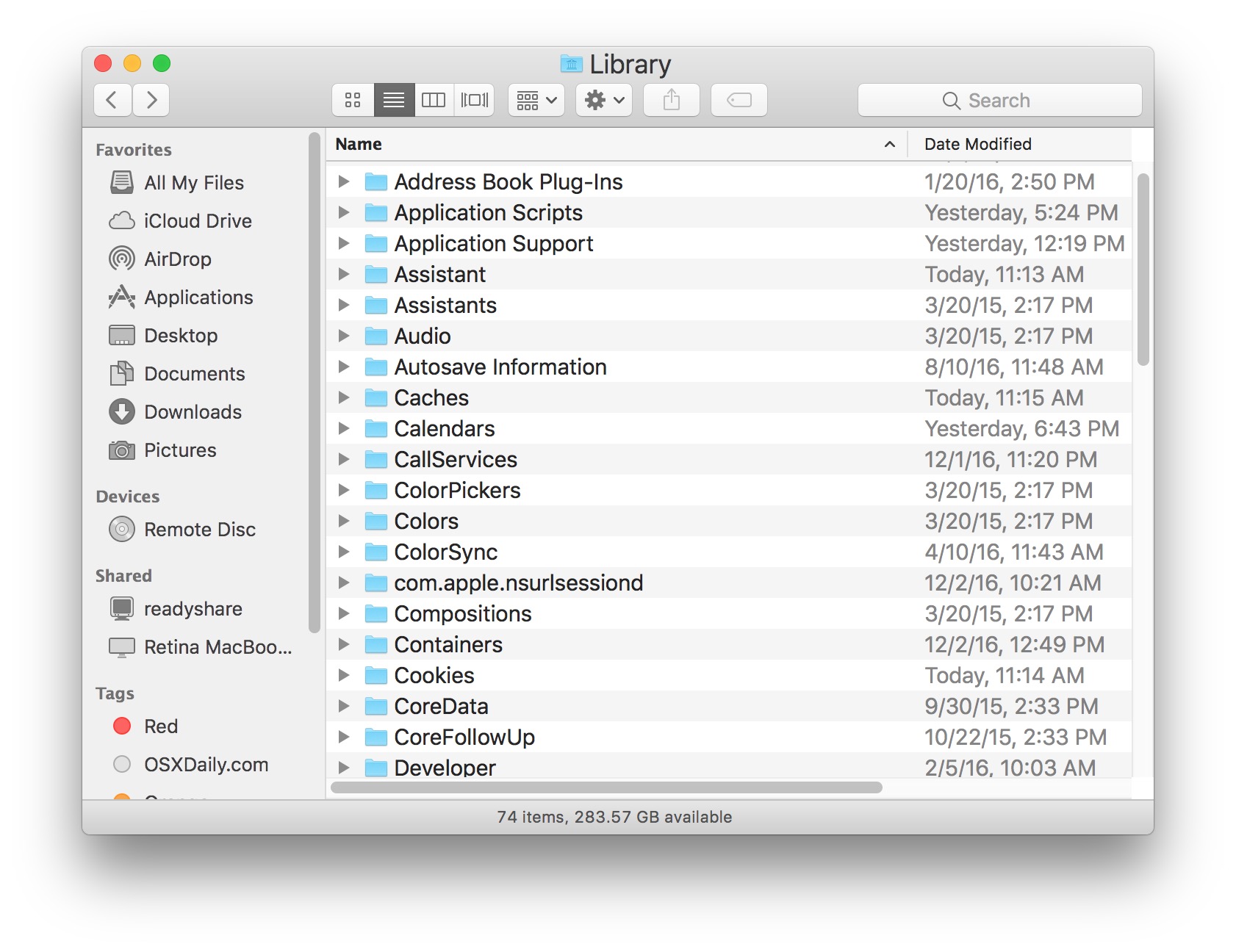
When the computer is rebooted and the associated program launched again, it recreates this file, but blank of preferences, thus since it's rebuilt it's free of problems.
This procedure also works for other programs like iPhoto or iTunes, or whatever that stores a preference file (.plist) in the (hidden) User/Library folder, the procedure is the same, just sub out the program your having problems with .plist file instead of the System Preference .plist file below.
Known preference files issues:
com.apple.systempreferences.plist (corrupted/not launching System Preferences)
com.apple.desktop.plist (corrupted/not working desktop picture changes)
com.apple.safari.plist (safari issues)
See the Steps #12 and #13 for OnyX and it's preference file checker to find other corrupted preference (.plist) files that might be causing your issues.
Library Preferences On Mac
So we are going to delete a preference file in a hidden folder, this will only affect the preference file, not your personal files or programs.
1: Go to the Finder and select Go menu and Go To Folder
2: Now paste or type
~/Library/Preferences
3: Press GO! and a folder will appear
4: Scroll down and find
Where Is The Library Preferences On A Mac Download
com.apple.systempreferences.plist com.apple.desktop.plist (or whatever program your having problems with)
5: There may be two of the same named file, drag the one you can to the Trash can
Where Is The Library Preferences On A Mac Store
6: Restart the computer and open System Preferences (or problem program) and reset all your preferences again